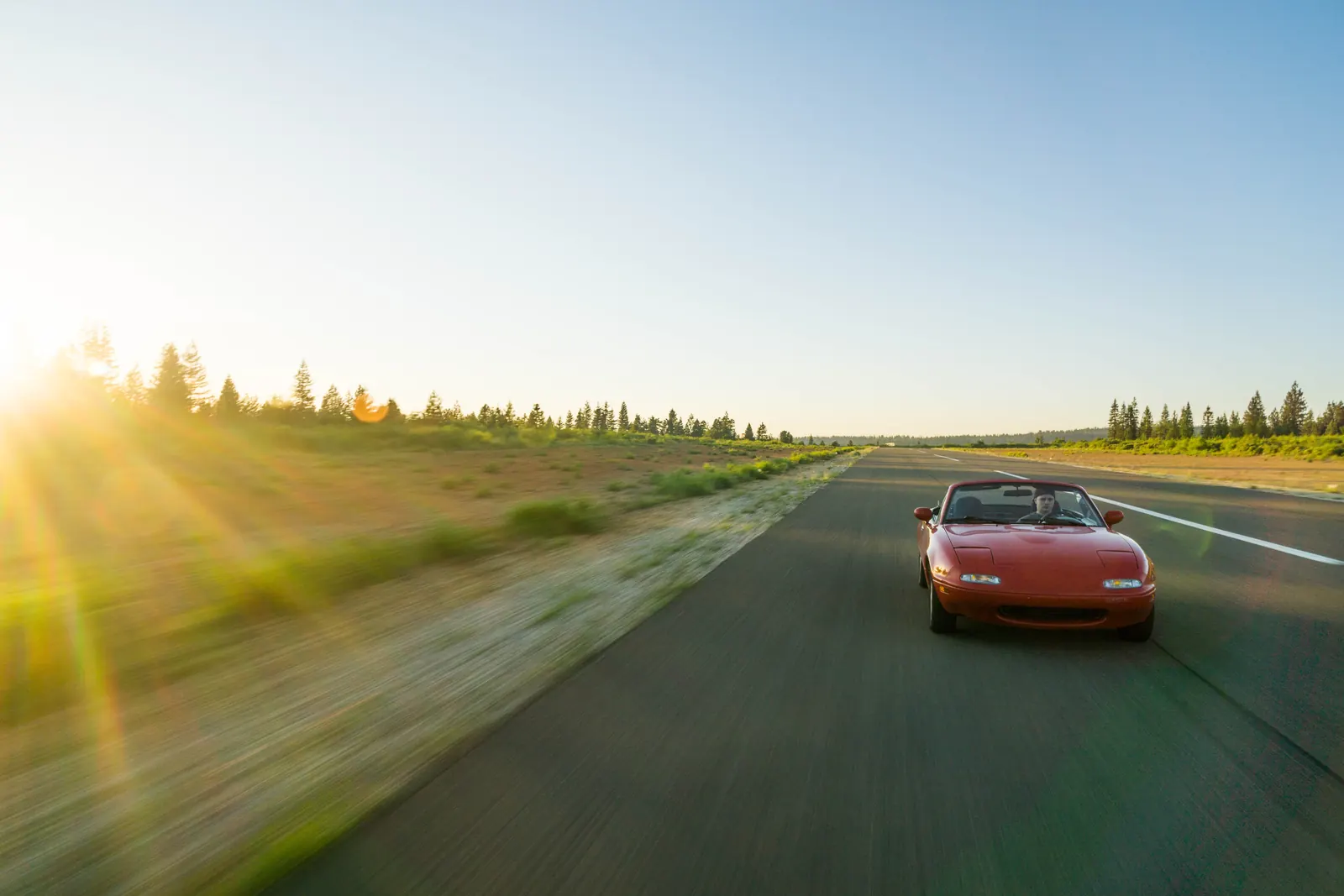
A red two-seat roadster with its top down driving toward the camera on an empty highway at golden hour

Independent field guide · Fall 2026

Two seats. No roof. All road.

Roadster Now is a field guide to the purest kind of car: how roadsters work, where they came from, which one fits your life, and the American roads that were made for them.

Seats
2
Fixed roof
0
Driven wheels
Rear
Ideal balance
50:50

Photo: Wil Stewart · CC0 · Credits

Why roadsters

A roadster is the simplest promise a car can make: two seats, an open sky and a road that bends.

  1. 01

    Light

    Every pound you don’t carry is a pound you don’t have to stop, turn or accelerate. Lightness makes everything else easier.

  2. 02

    Open

    Without a roof you hear the engine, smell cut grass and feel the temperature drop as the road dips into a valley.

  3. 03

    Direct

    Short wheelbase, rear-wheel drive, a manual if you’re lucky. Inputs go in, answers come straight back through the seat.

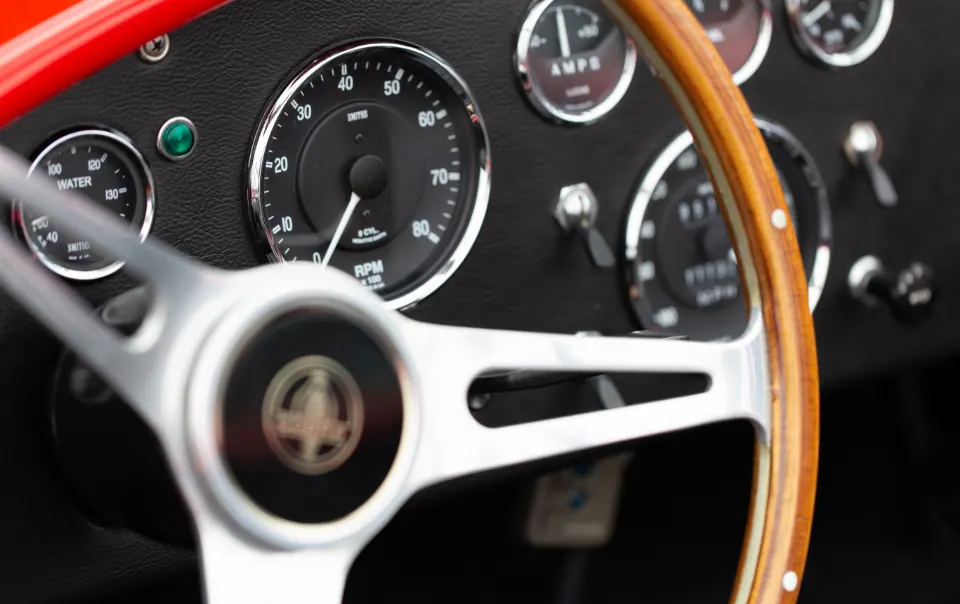
Close-up of a classic roadster cockpit: a wood-rimmed steering wheel with chrome spokes in front of round analog gauges
Analog everythingPhoto: Travis Soule · CC0

01 — Anatomy

What makes a roadster a roadster

Six traits separate a true roadster from a car that simply lost its roof. Tap a marker on the drawing or pick a trait from the list.

Roadster side elevation An original line drawing of a generic two-seat roadster seen from the side: long hood, windshield, open cockpit with a single headrest, short rear deck and two wheels, with six numbered markers. OVERALL LENGTH WHEELBASE
Fig. 01 — Generic roadster, side elevation Original drawing · not to scale
  1. No fixed roof and exactly two seats. Fewer seats mean a shorter car, a lighter structure and a cabin built around the person driving rather than the people riding along.

  2. The roof is temporary: a fabric top that folds behind the seats, or a removable or folding hardtop. Either way it’s designed to vanish, not to be the default.

  3. Many roadsters mount the engine behind the front axle line (“front-mid”), or behind the seats in mid-engine designs. Pulling mass toward the middle of the car moves weight distribution close to 50:50.

  4. The classic layout: front wheels steer, rear wheels push. Splitting those jobs keeps the steering clean and lets a skilled driver adjust the car’s attitude with the throttle.

  5. You sit just inches above the pavement. A low center of gravity means less body roll, quicker changes of direction and more information through the seat of your pants.

  6. Little bodywork hangs past the wheels, and every extra pound is treated as the enemy. Less weight lets smaller brakes, tires and engines do the same job — and do it for longer.

Roadster, convertible, spider… what’s the difference?

Body-style names overlap. Here’s how enthusiasts generally use them.

Body styleSeatsRoofWhat it usually means
Roadster2Soft top · removable · noneDesigned as an open car from the start. Light, simple and sporting.
Convertible / Cabriolet2–4Folding soft or hard topOften derived from a coupe or sedan. Prioritizes comfort and practicality.
Spider / Spyder2Soft top · noneAn Italian-rooted name for an open two-seater — effectively a roadster.
Targa2Removable center panelA fixed rear hoop or window stays in place for rigidity and rollover protection.
Speedster2Minimal · noneCut-down windshield, stripped equipment — the roadster idea distilled further.
Barchetta2NoneItalian for “little boat”: a light, open, racing-derived two-seater.

02 — History

A century with the top down

From bare-bones runabouts to modern machines with folding hardtops, the recipe has barely changed in a hundred years.

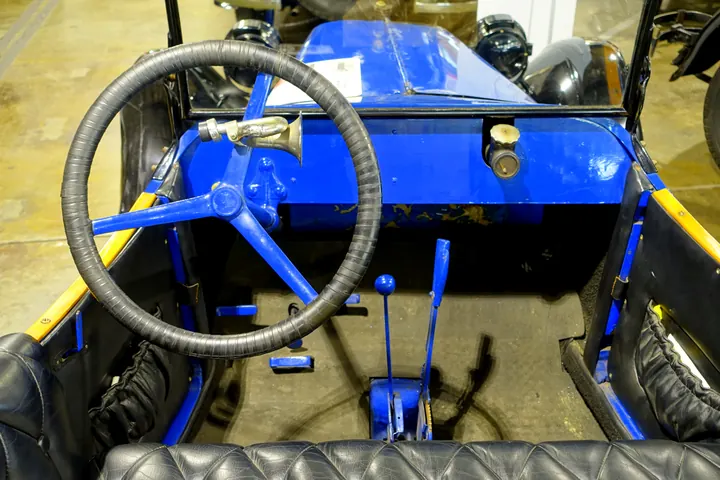
  1. Cockpit of a 1914 roadster: a large black steering wheel, exposed floor levers and a blue-painted body with no doors or roof

    1910s

    Born bare

    The first roadsters were exactly what the word promised: two seats, a minimal windshield and a canvas top that was more suggestion than shelter. Often no doors, rarely side windows — just the light, quick choice on the showroom floor.

    1914 roadster, Automobile Driving Museum, El Segundo, CA · Photo: Daderot, CC0

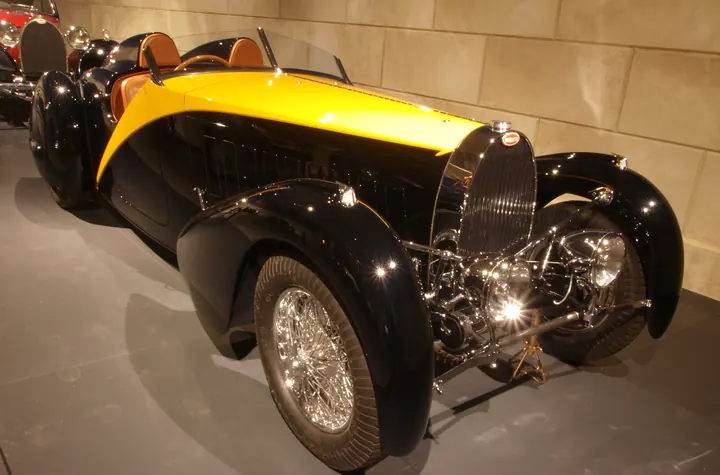
  2. A black and yellow 1934 coachbuilt roadster with long flowing fenders and wire wheels on display in a museum

    1930s

    Coachbuilt drama

    Wealthy buyers commissioned coachbuilders to wrap open two-seat chassis in long hoods, sweeping fenders and hand-stitched leather. The roadster became a statement piece — fast, rare and impractical on purpose.

    1934 coachbuilt roadster · Photo: AlfvanBeem, CC0

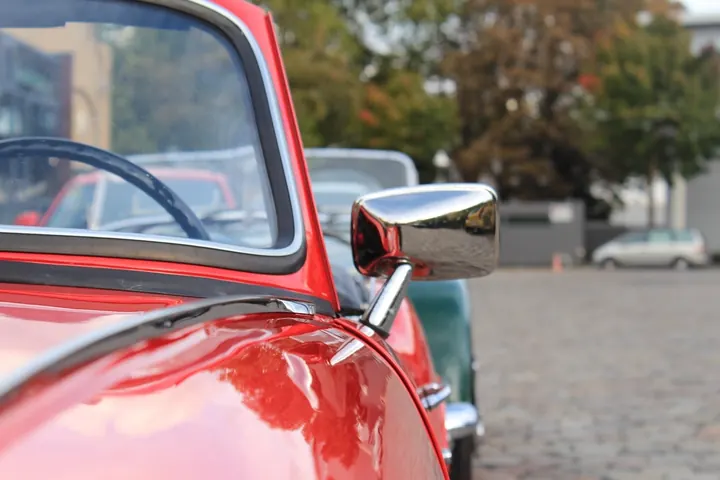
  3. Close-up of a red classic convertible’s chrome side mirror and windshield frame, with other vintage cars parked behind it

    1950s–60s

    The import wave

    After the war, small European two-seaters arrived in America by the shipload. They were light, cheap to run and easy to race on weekends, and amateur club racing grew right alongside them. Much of what Americans mean by “sports car” was written in these two decades.

    Classic roadster detail · Photo: rawpixel, CC0

  4. 1970s

    Near extinction

    Proposed federal rollover standards, new bumper rules and tightening emissions limits made open cars look like a bad bet. By the middle of the decade several automakers had dropped convertibles and roadsters from their US lineups altogether.

  5. 1989

    The revival

    A small Japanese two-seater debuted with a formula straight out of the sixties — front engine, rear-wheel drive, soft top, roughly a ton of curb weight — and buyers lined up. Within a few years many major brands had a roadster in the showroom again.

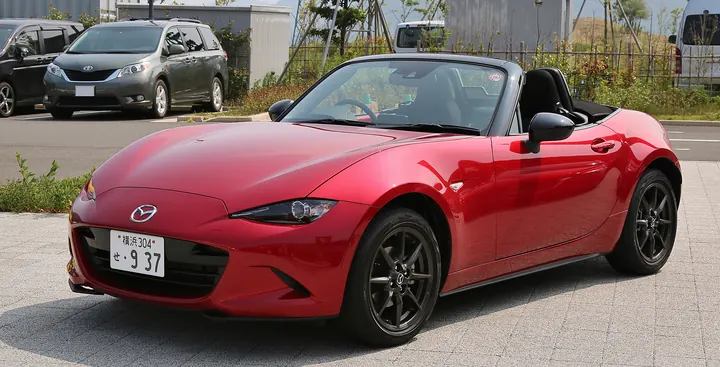
  6. A red modern two-seat roadster with its soft top folded, parked on a paved lot

    Today

    Same recipe, better tools

    Stability control, airbags, reinforced windshield frames and tops that fold in seconds. Modern roadsters are safer and quicker than ever, yet the brief hasn’t changed: two seats, open sky, and a road worth taking the long way.

    Modern roadster · Photo: TTTNIS, CC0

03 — Roadster Finder

Which roadster fits your life?

Four quick questions. No email required, nothing is sent anywhere — your answers stay in this browser tab.

  • Modern Lightweight — small, cheap to run, endlessly fun
  • Vintage Classic — chrome, carburetors, Sunday mornings
  • Grand Tourer — power and comfort for long days
  • Track Special — stripped, raw, built for lap times
Step 1 of 4
Where will you drive it most?
What’s your budget to buy?
How hands-on are you with maintenance?
What matters most to you?

04 — Roads worth the drive

Four American roads made for an open car

Scenery that wraps around you, corners that reward a light car, and enough elevation to feel the air change on your skin.

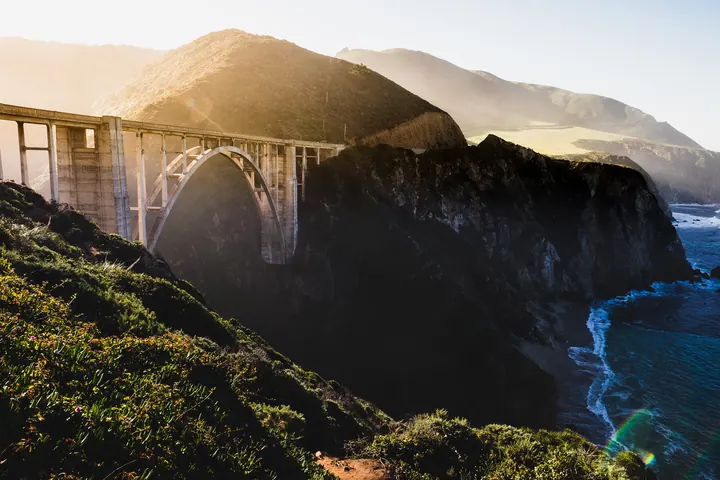
The concrete arch of Bixby Creek Bridge spanning a canyon above the Pacific on California’s Big Sur coast at golden hour
Photo: Dave Lastovskiy · CC0
California

Pacific Coast Highway, Big Sur

Roughly 90 miles of cliff-edge two-lane between Carmel and San Simeon, with the ocean straight below. Go early on a weekday — and check Caltrans before you leave, because storms and slides can close sections for months.

Route
CA-1
Length
~90 mi
Best
Apr – Oct
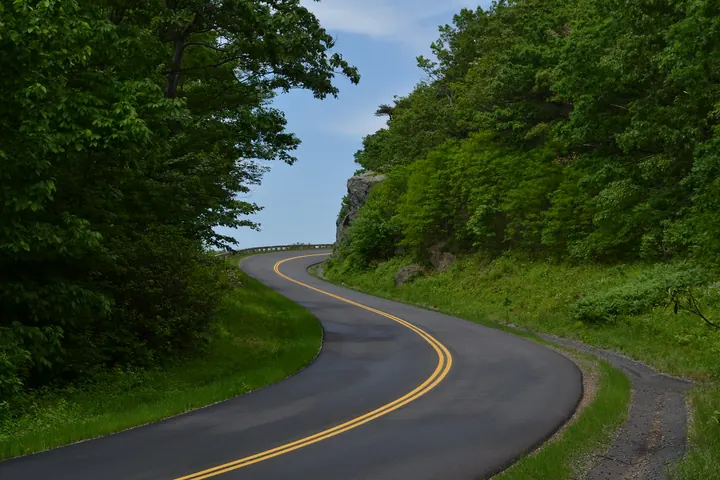
A two-lane road with a double yellow line curving through dense green forest on the Blue Ridge Parkway
Photo: NPS · Public domain
Virginia · North Carolina

Blue Ridge Parkway

469 miles of ridgeline with no billboards and no commercial trucks. A 45 mph limit keeps the pace unhurried — exactly right for a roadster with the top folded.

Length
469 mi
Max limit
45 mph
Best
May – Oct
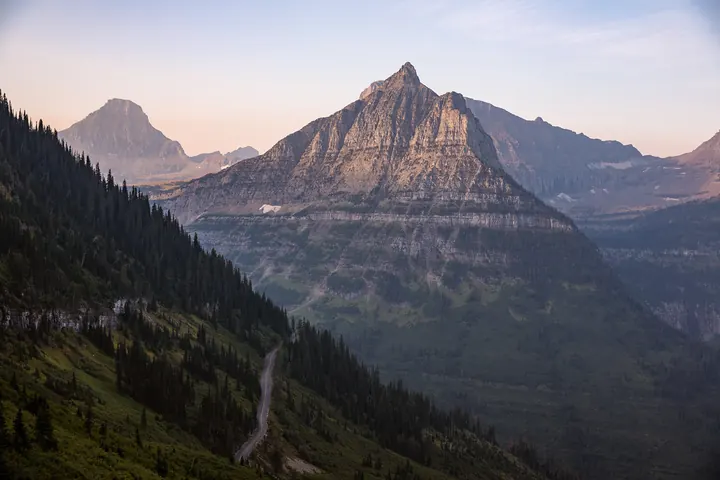
Mountain peaks at sunrise above a thin road cut into the slope on Going-to-the-Sun Road in Glacier National Park
Photo: Glacier NPS · Public domain
Montana

Going-to-the-Sun Road

About 50 miles across Glacier National Park, cresting the Continental Divide at Logan Pass. The alpine section usually opens fully in early summer, and timed vehicle reservations have been required in recent peak seasons.

Length
~50 mi
Summit
6,646 ft
Best
Jul – Sep
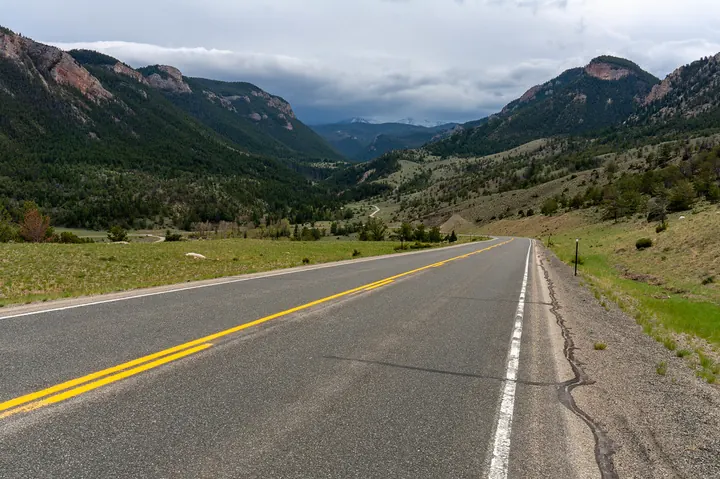
A two-lane highway with a yellow center line leading toward rugged mountains under a cloudy sky on the Beartooth Highway
Photo: stefanserena · CC0
Montana · Wyoming

Beartooth Highway

US-212 switchbacks up to nearly 11,000 feet. Snowbanks can line the road well into summer, so pack a jacket and plan for a top-down, top-up, top-down kind of day.

Length
~68 mi
Summit
10,947 ft
Open
~Late May – Oct

Seasons, closures, speed limits and permit rules change. Always check the official state DOT or National Park Service page before you go, obey posted limits, and keep spirited driving for the track.

05 — Ownership

Living with a roadster

The practical stuff: what to check before you buy, how to keep the top alive, and when to fold it.

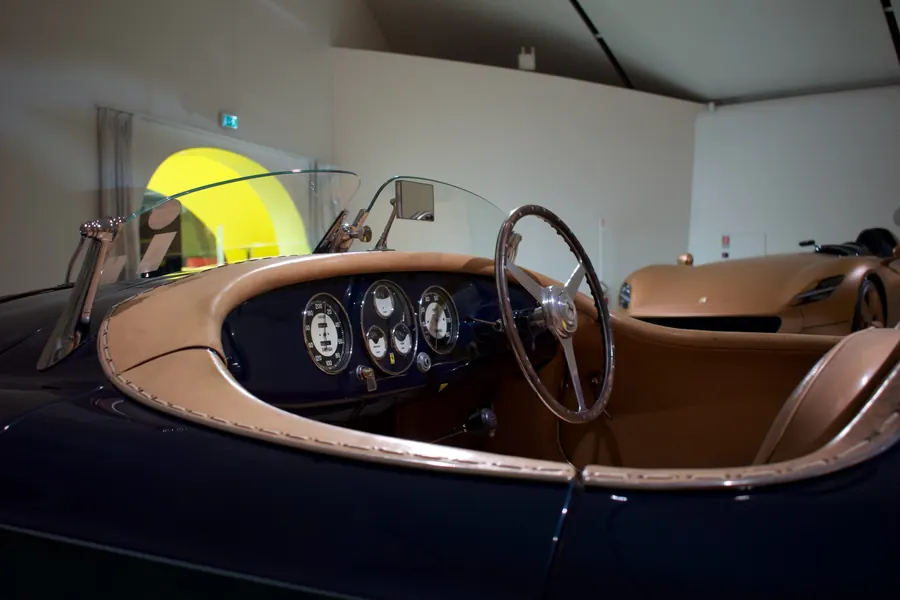
A vintage open two-seater in a museum, its wooden steering wheel and round gauges framed by a low curved windshield

Interactive checklist

The pre-purchase inspection

0 of 10 checked
Saved only in this browser.

Quick tool

Is it top-down weather?

70°F
Sky

Top down. Go.

This is exactly the weather roadsters were built for. Sunscreen on, sunglasses on, out the door.

A rule of thumb, not a forecast.

Soft-top care

Clean it with a cleaner made for fabric or vinyl tops, never fold it wet, and skip brush-type car washes. Clear the drain holes every spring.

Winter storage

Fill the tank and add stabilizer, connect a battery maintainer, set tires to the upper recommended pressure and store it with the top up.

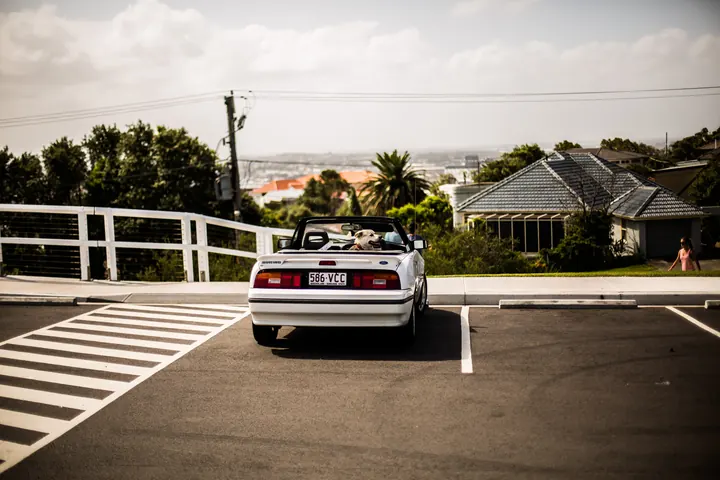
A dog riding in the passenger seat of a white convertible with its top down, parked above a coastal town
Co-pilot approved. Photo: Christopher Windus · CC0

Insurance

If it’s a weekend car, ask about agreed-value or collector policies with mileage limits. Compare them against standard coverage before you sign.

Wind & sun

Sunscreen, sunglasses and a cap that stays put. A wind deflector between the seats cuts buffeting dramatically at highway speeds.

What exactly is a roadster?

A roadster is an open two-seat car designed from the start to be driven without a roof. Historically that meant minimal weather protection — sometimes no side windows at all. Today the term covers two-seaters with a folding soft top or a removable or folding hardtop, as long as the car is fundamentally built around open-air driving.

How is a roadster different from a convertible?

Seats and intent. A roadster has two seats and is conceived as an open car. A convertible (or cabriolet) is usually a version of a coupe or sedan with a folding roof, often with a back seat and comfort-oriented tuning. Most roadsters are technically convertibles, but most convertibles aren’t roadsters. The comparison table above breaks it down.

Are roadsters safe?

Modern roadsters are engineered for open-top crashes, with reinforced windshield frames, fixed or pop-up rollover protection behind the seats, and the same airbags and stability systems as other new cars. Results vary by model and year, so look up the NHTSA and IIHS ratings for the exact car you’re considering. Vintage cars predate most modern safety equipment — drive them accordingly.

Can a roadster be a daily driver?

Plenty of owners do it. The real limits are cargo space (think weekend bag, not warehouse run), cabin noise on the highway and visibility around taller traffic. A modern roadster with a well-sealed top and the right tires copes with rain and winter; a vintage car is better saved for good days.

Soft top or hardtop?

A fabric soft top is lighter, simpler and usually quicker to fold — on some cars by hand in a few seconds. A retractable hardtop adds weight and complexity but brings better security, insulation and a quieter cabin. If you face real winters or park on the street, a hardtop (or a removable one for the cold months) is worth a look.

When is the best time to buy?

In much of the country, demand for open cars dips in late fall and winter, which can mean more room to negotiate. Spring is when sellers tend to feel most confident. Whenever you buy, budget for an independent pre-purchase inspection — it’s the cheapest insurance in the hobby.

Manual or automatic?

For many enthusiasts, the manual gearbox is part of the experience, and some models are easier to resell with one. Modern automatics and dual-clutch gearboxes are quick, though, and make traffic far less tiring. Drive both before you decide — and be honest about your commute.

Is Roadster Now affiliated with an automaker or dealer?

No. Roadster Now is an independent publication. We don’t sell or broker cars, and any trademarks mentioned on this site belong to their respective owners. See our Disclaimer for details.